



The Litejam Neo Acoustic A1
When we started developing the Litejam Neo Acoustic A1, we knew we didn't simply want to take everything we had already created for our electric guitars and put it into an acoustic body. We wanted to explore what Litejam could do specifically for acoustic guitarists and, more importantly, how technology could help players develop some of the techniques that are often the hardest to learn. After spending time playing the Neo Acoustic A1 on stage and testing its new features, Alex MayBe wanted to show exactly what makes this guitar different and why we're so excited about its launch. The result is an instrument that keeps the Litejam features you already know—scales, chords, arpeggios, custom chords and chord progressions—while introducing completely new ways to work on the right hand, rhythm, strumming and fingerpicking.
One of the biggest differences between learning electric and acoustic guitar is something many players discover quite quickly: knowing where to put your fingers is only half of the process. On an electric guitar, beginners often focus heavily on the fretting hand, while the right hand can initially feel relatively straightforward. Acoustic guitar is different. The same chord can sound completely different depending on the rhythm, movement and pattern of your strumming hand, and many songs depend just as much on those movements as they do on the chords themselves. That's why the Neo Acoustic A1 introduces a new feature that lets you see how your right hand should move. Instead of simply showing you which chord to play, the guitar can visually guide you through the rhythm of the song, helping you understand when to move your hand and how to play the pattern.
The system becomes even more interesting when you combine it with Litejam's Chord Progression feature. In the video, Alex demonstrates a progression inspired by Zombie, using the chords E Minor, C, G and D, while the app displays the progression, tempo and time signature. The Neo Acoustic A1 then takes that information directly to the fretboard, showing the player what to do in real time. Rather than trying to memorize an entire song before playing it, you can start by concentrating on the chords themselves, follow the visual guidance, and gradually bring the different elements together. It's a learning process that feels much closer to actually playing music than simply repeating isolated exercises.
And this is where the Neo Acoustic A1 really begins to separate itself from a traditional acoustic guitar. The player isn't locked into a single way of playing each chord. You can edit the progression and choose whether a particular chord uses strumming or fingerpicking, while also changing the rhythm of each chord. For strumming, the app can show down and up movements, while fingerpicking uses different patterns based on the fingers you want to use. Alex demonstrates the P, I, M and A fingerpicking system and explains how the different colors on the fretboard indicate which finger should be used. This means that instead of simply learning which chord comes next, you're also learning how to physically play it.
For Alex, this has a particularly personal meaning because fingerpicking was something he remembers struggling with when he first wanted to learn songs such as Nothing Else Matters. The idea that the guitar can now visually guide a player through fingerpicking patterns changes the learning experience completely. And the system doesn't stop at one fixed exercise: players can change patterns, choose different approaches for different chords, and build their own combinations. In the demonstration, a single four-chord progression can contain different fingerpicking styles and different strumming patterns, creating a much more dynamic way to practice. The goal isn't to make everyone play exactly the same way, but to give musicians tools that help them experiment and improve.
The Neo Acoustic A1 also continues to evolve beyond these new acoustic-specific features. The Litejam app is designed to keep growing, with new features planned over time and more possibilities for customization and sharing within the community. Players can create their own patterns, chords and progressions and share them with friends or students, opening up possibilities not only for individual practice but also for teachers and guitar communities. At the same time, the Neo Acoustic A1 retains the broader Litejam learning ecosystem, including Scale Mode, chords, arpeggios and custom patterns, meaning players aren't giving up the tools that made the electric Litejam guitars unique—they're gaining a whole new layer focused on acoustic playing.
But after all the technology and features, there's another part of the Neo Acoustic A1 that matters just as much: it has to feel like a real guitar. Alex has already used it on stage in different situations and describes it as comfortable both sitting and standing, while emphasizing that it feels trustworthy enough to take onto a live stage. He also highlights its carbon fiber construction, describing the guitar as extremely light while still being remarkably strong. During one performance in Bangkok, he even changed the tuning from E down to C to play Perfect by Simple Plan, something that could easily cause tuning issues on another instrument, but the Neo Acoustic A1 handled the change well. For Alex, that's an important part of the experience: even if you don't care about any of the additional features, you can simply turn them off and play the guitar as a normal acoustic instrument.
The Neo Acoustic A1 is therefore much more than the next guitar in the Litejam lineup. It's our attempt to rethink what an acoustic guitar can offer a player when the instrument itself becomes part of the learning process. You can practice scales, chords and progressions, but you can also learn the movements of your right hand, explore different strumming patterns, develop fingerpicking technique, experiment with custom arrangements and continue discovering new features as the Litejam app grows. And because new updates will continue to arrive, the experience isn't designed to stay static—the guitar you receive today is only the beginning of what it can become over time.
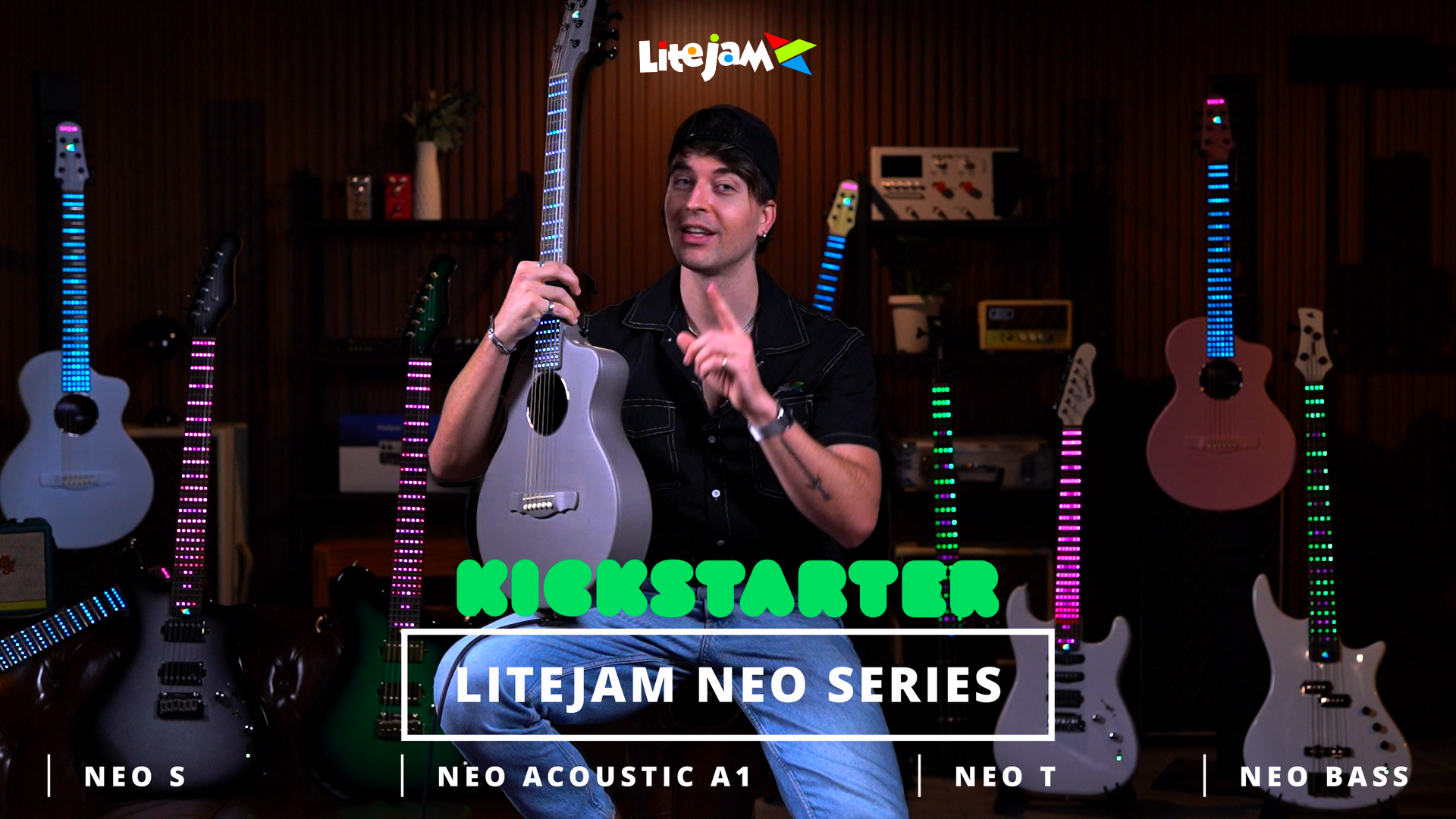
The Litejam Neo Series is now live on Kickstarter, and the Neo Acoustic A1 is at the center of this new chapter. If you've been following its development through our videos, events and demonstrations, now is the moment to become part of the launch. The first production allocation of the Neo Acoustic A1 is limited to 400 units planned for September 2026, while the next production batch is planned for late October through November. Backers are fulfilled according to the order in which they complete their Kickstarter pledges, so backing early gives you the best opportunity to secure one of the earliest production slots.
The Neo Acoustic A1 started with a simple question: what if the guitar could actually help you learn how to play it? Now we're turning that idea into a real instrument and putting it in the hands of guitarists around the world.





แชร์บนช่องทางโซเชียลมีเดียของคุณ:
News & Updates - EP.42 | LITEJAM NEO SERIES - NOW on KICKSTARTER
News & Updates - EP.44 | Litejam Neo T & Litejam Neo S - Demo, Features and Sound